You’ve been there. You roll your ankle, feel that sickening pop, and the first thing you do—after a few choice words—is strap on a heavy-duty ankle brace. It feels secure. It feels like a protective suit of armor for your joint. You might even wear it for weeks, or months, “just to be safe” during your morning run or pickup basketball game.
But have you ever noticed that once you take the brace off, your ankle feels like a wet noodle? Does it feel less stable than it did before the injury?
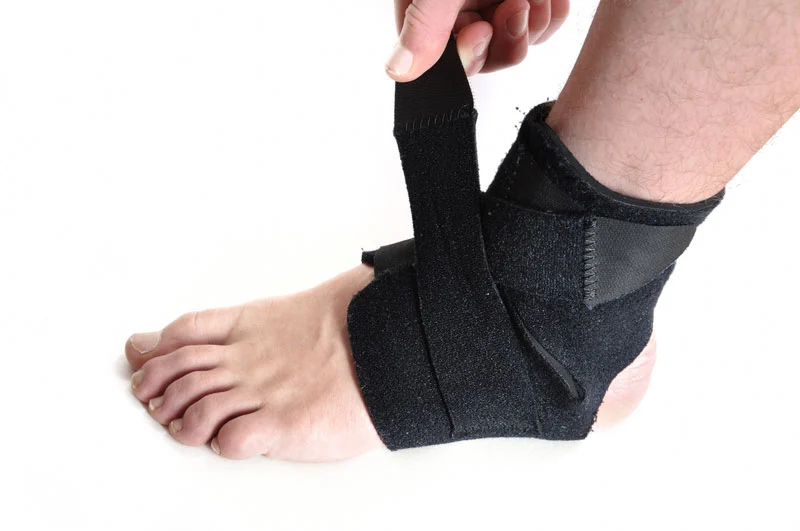
There is a growing concern in the world of sports medicine that ankle braces might be doing more harm than good for your long-term mobility. While they are great at preventing a joint from moving in a way it shouldn’t right now, they often act as a crutch that tells your muscles they can go on permanent vacation. Today, we’re looking at the modern science behind bracing, the dangers of immobilization, and why active, functional rehab is the only way to truly “brace-proof” your body.
The Mechanical vs. Neuromuscular Conflict
When you wear a brace, you are providing “mechanical” stability. You are using plastic, Velcro, and fabric to hold the bones in place. However, your body was designed to provide “neuromuscular” stability—meaning your brain, nerves, and muscles work together in milliseconds to keep you upright.
The problem? Your brain is incredibly efficient (and a bit lazy). If an external brace is doing the work of stabilizing the joint, your brain stops sending the signal to the supporting muscles to fire. Over time, this leads to a breakdown in communication. You aren’t just losing muscle; you’re losing the “wiring” that prevents future sprains.
What Modern Science Says About Ankle Braces in 2026
We used to think that bracing was a harmless safety net. Recent research has painted a more complex picture. Sports medicine is shifting away from external supports toward internal strength.
- The Kinetic Chain Disruption: A 2026 study published in PMC (PubMed Central) highlights that while ankle supports can reduce injury incidence in the short term, they may negatively influence the entire lower-extremity kinetic chain. By restricting the ankle, you force the knees and hips to absorb forces they weren’t meant to handle, potentially leading to injuries higher up the leg.
- The Atrophy Warning: A 2024 Cochrane Review confirmed that immobilization of the ankle—even through “removable” supports that are used too frequently—significantly increases the risk of ankle weakness and joint stiffness. The study emphasizes that “early weight-bearing” and movement lead to better functional outcomes than staying braced and inactive.
- Peroneal Muscle Latency: Experts in the British Journal of Sports Medicine have noted that chronic bracing can lead to “decreased peroneal muscle activation.” These are the muscles on the side of your leg that prevent your ankle from rolling. If they don’t fire fast enough because they’ve been “shushed” by a brace, you are actually more likely to roll your ankle the moment you take the brace off.
The “Atrophy Cycle”: Why Rest and Bracing Are a Dangerous Duo
Many people follow the outdated R.I.C.E. method (Rest, Ice, Compression, Elevation). They rest for a week, ice the swelling, and then put on a brace to start walking again. This creates what we call the Atrophy Cycle:
- Resting Too Long: Without movement, the blood flow to the area decreases. Nutrients can’t get in, and waste products can’t get out. This leads to the formation of thick, inflexible scar tissue that makes the ankle feel tight and stiff.
- The Brace Crutch: To compensate for the stiffness and pain, you use a brace. This allows you to walk, but your muscles (like the calves and peroneals) begin to shrink.
- Permanent Instability: Because you never “re-trained” the ankle to support itself, the ligaments stay stretched and the muscles stay weak. Now, you feel like you need the brace just to walk on uneven grass.
Breaking this cycle is the only way to regain your freedom. According to modern ankle rehab standards, relying on a brace covers up weakness rather than fixing it. If you want to stop the cycle, you have to move.
Warning: What Happens If You Neglect Functional Rehab?
If you choose to simply wear a brace and wait for the pain to go away, you are leaving your ankle in a “semi-healed” state. This is a recipe for Chronic Ankle Instability (CAI).
- Proprioceptive Loss: Your nerves lose the ability to tell your brain exactly where your foot is. This is why people with weak ankles often feel “clumsy” or trip easily.
- Secondary Injuries: When your ankle is weak, your gait changes. This puts abnormal stress on your plantar fascia, your Achilles tendon, and even your lower back.
- Arthritis: An unstable joint is like a car with a loose wheel. It wobbles. That wobble causes the cartilage in the joint to wear down much faster, leading to early-onset arthritis.
The Solution: Active, Functional Rehabilitation
If ankle braces aren’t the long-term answer, what is? The answer lies in Active Rehab. Instead of trying to shield the ankle from the world, we need to prepare the ankle for the world.
Functional rehab focuses on three main pillars:
- Restoring Range of Motion: Breaking up that scar tissue through specific, gentle movements.
- Neuromuscular Re-education: Exercises that challenge your balance and force your brain to “talk” to your ankle again.
- Progressive Strengthening: Building up the muscles around the joint so they can act as a “natural brace.”
This is where HEM Ankle Rehab comes in. It is the premier at-home treatment program designed to take you from a painful, swollen mess to a strong, stable athlete without the need for expensive physical therapy sessions or clunky, restrictive braces. HEM focuses on the science of how an ankle actually heals, ensuring you don’t just feel better today, but stay better for years.
Main Benefits of Going Brace-Free (Through Active Rehab)
| Feature | The Brace Approach | The Active Rehab (HEM) Approach |
|---|---|---|
| Muscle Strength | Leads to atrophy and weakness. | Builds a “natural brace” of muscle. |
| Stability | Mechanical only (temporary). | Neuromuscular (permanent). |
| Flexibility | Causes stiffness and scar tissue. | Restores full range of motion. |
| Confidence | You feel “fragile” without the brace. | You trust your body to move again. |
How to Transition Away from Ankle Braces
If you’ve been wearing a brace for a long time, you can’t just throw it in the trash and run a marathon tomorrow. You need a transition plan. Here is the “How-to” for regaining your ankle’s independence:
Step 1: Start with Non-Weight-Bearing Drills
Before you take the brace off for a walk, take it off while sitting. Spend 5 minutes “waking up” the joint. Use your foot to write the alphabet in the air. This forces every small muscle in the foot and ankle to fire without the risk of a roll.
Step 2: Rebuild the Foundation (The Calf)
The calf muscle is the engine of your ankle. Most people with chronic sprains have weak, tight calves. Learning how to do calf raises properly is one of the single best things you can do to support your ankle ligaments.
Step 3: Gradually Reduce Brace Use
Start by wearing the brace for “high-risk” activities (like a game) but taking it off for “low-risk” activities (like walking the dog). Slowly increase the “brace-free” time as your strength improves.
Step 4: Use a Structured Program
Don’t guess. Use a proven system like HEM Ankle Rehab that gives you a day-by-day roadmap. It takes the guesswork out of recovery and ensures you are doing the right things at the right time.
People Also Ask (FAQ)
Is it bad to sleep in an ankle brace?
Unless specifically instructed by a surgeon following a major fracture, sleeping in a brace is generally not recommended. It further restricts blood flow and keeps the joint in a static position, contributing to morning stiffness. Your ankle needs that “uninterrupted” time to breathe.
Should I wear a brace for every workout?
If you are in the “acute” phase (the first 1-2 weeks) of a sprain, a brace can help you stay mobile. However, if you are still wearing it 6 months later “just in case,” you are likely inhibiting your muscle growth. You should be working toward a state where your muscles provide the support, not the fabric.
How do I know if my ankles are weak?
A simple test is the “Single Leg Stance.” Try standing on your injured leg for 30 seconds with your eyes closed. If you are wobbling all over the place or have to put your foot down constantly, your proprioception is compromised. That is a sign of a weak ankle.
Can exercises really replace a brace?
Yes. Numerous studies show that “Neuromuscular Training” is just as effective—if not more effective—at preventing future sprains than bracing alone, because it addresses the cause (weakness) rather than the symptom (instability).
Final Thoughts: Invest in Your Foundation
Your ankles are the foundation of every movement you make. Whether you’re a professional athlete, a weekend warrior, or someone who just wants to walk through the grocery store without pain, you deserve a foundation that is strong, stable, and natural.
Don’t let ankle braces become a permanent part of your wardrobe. Take the time to heal correctly. Ditch the ice, forget the “rest forever” advice, and embrace an active approach to recovery. With HEM Ankle Rehab, you can rebuild your ankles from the ground up and get back to living your life brace-free.
Ready to stop relying on the crutch? Start your journey to permanent stability today with HEM Ankle Rehab.