There is a specific kind of silence that happens immediately after a grade 3 ankle sprain. It’s that split second between the moment your foot rolls and the moment the white-hot pain and massive swelling take over. If you are sitting there right now, staring at an ankle that has completely lost its shape and turned a terrifying shade of purple, the anxiety is likely setting in. Is it broken? Will I ever be able to jump or run again? Am I looking at a six-month recovery?
First, take a deep breath. While a “complete rupture” sounds like a career-ending diagnosis, the reality in 2026 is much more optimistic. The human body is an incredible machine designed to bridge the gap of a torn ligament—provided you give it the right environment. The problem is that most people (and unfortunately, many doctors) are still using recovery protocols from the 1980s. If you want to rebuild a bulletproof foundation, you have to move beyond the old “wait and see” mindset.
In this pillar guide, we are going to break down the anatomy of a rupture, the neurological “blackout” that occurs during a severe sprain, and why the newest scientific standards demand that you get moving much sooner than you think.
The Anatomy of a Rupture: What Actually Happened?
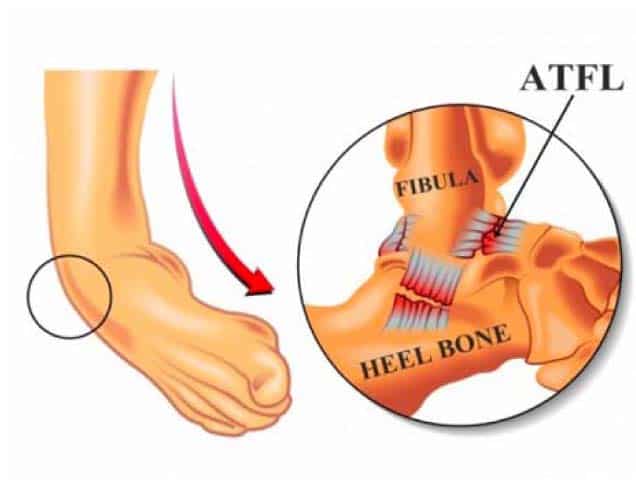
Ankle sprains are measured on a scale of severity, but a grade 3 injury is in a category of its own. In a grade 1 or 2 sprain, the ligament fibers are stretched or partially torn. In a grade 3 ankle sprain, the ligament is completely severed. It is a full-thickness rupture.
Because the ligament is no longer connecting bone to bone, your joint has lost its primary seatbelt. This is why the hallmark of a grade 3 injury is “gross instability.” If you were to try and stand, it might feel like your ankle isn’t even attached to your leg. The massive swelling and bruising you see are actually your body’s “emergency response team” rushing fluid and blood to the site to create a biological splint. While it looks scary, that swelling is proof that your body has already started the repair process.
The “Neurological Blackout”
What many people miss is that a grade 3 sprain is as much a nerve injury as it is a ligament injury. Your ligaments are loaded with sensory nerves called proprioceptors. These are the sensors that tell your brain exactly where your foot is in space. When the ligament snaps, that high-speed data connection is severed. This is why even after the pain goes away, your ankle still feels “wobbly” or disconnected. If you don’t intentionally retrain that connection, you are effectively driving a car with a broken GPS.
⚠️ Warning: The Danger of the “Protection” Trap
When you have a severe injury, the natural instinct is to protect it at all costs. You want to wrap it in a rigid brace, put it in a boot, and not touch it for a month. In 2026, we know that total immobilization is a direct path to chronic disability.
The Stiffness Cycle
Within just 48 hours of total rest, the synovial fluid in your joint begins to thicken. It becomes more like molasses than lubricant. The collagen fibers that are trying to heal your ligament start to grow in a chaotic, tangled mess because they have no movement to guide them. This results in “scar tissue adhesions” that can limit your mobility for the rest of your life.
The Ankle Brace Dependency
While a walking boot or a heavy-duty brace might be necessary for the first 72 hours to manage extreme trauma, staying in one for weeks is devastating. Your brain is incredibly efficient; if a piece of plastic is doing the work of your peroneal muscles, your brain will simply “turn those muscles off.” This leads to muscle atrophy and a permanent dependency on external support. You don’t want a cage for your ankle; you want your ankle to be its own fortress.
Modern Science: The 2026 Shift to “Optimal Loading”
The sports medicine world has undergone a massive paradigm shift. We have moved away from “protection” and toward Optimal Loading. The consensus among top-tier athletic trainers is that ligaments require mechanical stress to heal correctly.
Expert Insight 1: Mechanobiology and Fiber Alignment
A 2025 study published in the Journal of Science and Medicine in Sport confirmed that “mechanotransduction”—the process by which cells convert mechanical loads into healing signals—is the primary driver of ligament regeneration. The study found that grade 3 ruptures healed with 40% higher tensile strength when active movement was initiated within day 4, compared to a group that was immobilized for 14 days. Source: JSAMS Mechanobiology Review.
Expert Insight 2: The Failure of the R.I.C.E. Protocol
The British Journal of Sports Medicine (BJSM) has officially replaced the R.I.C.E. method with PEACE & LOVE. They have specifically called out “Ice” as a potential inhibitor of the vascularization phase. By constricting blood vessels, ice prevents the “cleanup crew” of macrophages from removing damaged tissue, effectively stalling the repair of a completely torn ligament. Source: BJSM Soft Tissue Management.
Expert Insight 3: Secondary Prevention via Neuromuscular Control
A 2026 meta-analysis in the Journal of Athletic Training demonstrated that for grade 3 sprains, balance and “proprioceptive retraining” were significantly more effective at preventing long-term osteoarthritis than surgical intervention. Surgery can fix the tissue, but only active rehab can fix the “software” (the nerves). Source: JAT Neuromuscular Meta-Analysis.
The Solution: Active, Functional Rehabilitation
So, if resting and icing are out, how do you actually heal a grade 3 ankle sprain? The answer is a structured, progressive approach to Active Functional Rehab. Instead of being a passive observer of your recovery, you become the driver. You use movement as a manual pump to clear out swelling and a guide to rebuild the ligament.
Main Benefits of the Active Approach:
- Vascular Pumping: Muscle contractions act as a natural heart for your lymphatic system, flushing out the deep bruising and swelling much faster than elevation alone.
- Collagen Organization: Early movement tells the body exactly where to lay down new collagen fibers, ensuring your ankle sprain recovery time is productive, not just “waiting.”
- Nerve Re-wiring: By challenging your balance in a safe environment, you force your brain to find new pathways to communicate with your foot, eliminating that “loose” feeling.
- Total Independence: You build the strength needed to throw away the braces and boots, giving you total confidence on uneven ground.
The premier at-home solution for this modern approach is HEM Ankle Rehab. This system was designed specifically to bypass the outdated clinical methods that keep you coming back for months of expensive appointments. It provides a daily blueprint for how to heal a sprained ankle fast by focusing on the three pillars of true recovery: restoring circulation, re-establishing range of motion, and rebuilding neurological stability.
How-To: The 4-Stage Recovery Blueprint
Stage 1: The Circulatory Flush
During the first few days, you aren’t doing “workouts.” You are doing “circulation pumps.” These are gentle, non-weight-bearing movements designed to get blood moving. Think of this as clearing the debris off the construction site so the rebuilding can begin.
Stage 2: The Mobility Reset
Once the initial “sharp” pain subsides, you must break up the morning stiffness. This phase focuses on “dorsiflexion”—your ability to pull your toes up. If you don’t reclaim this movement, your body will compensate by changing how your knee and hip move, leading to secondary injuries.
Stage 3: The Functional Load
This is where we start “loading” the joint. We begin with weight-bearing exercises that challenge the muscles on the outside of your ankle (the peroneals). These muscles act as your “internal brace.” Since your ligament is healing, these muscles must step up and take the load.
Stage 4: The Proprioceptive Re-wire
The final stage is balance. You move from stable surfaces to unstable surfaces, forcing your brain to react. This is the stage that separates people who have “good ankles” from people who “always have weak ankles.”
People Also Ask (FAQ)
How long does a grade 3 ankle sprain take to heal?
If you follow the old “Rest and Ice” model, it can take 12 to 24 weeks to feel “okay,” and even then, the ankle often remains weak. With an active rehab system like HEM Ankle Rehab, most people see significant stability and can return to normal walking in as little as 3 to 6 weeks. Full return to high-impact sports usually takes 8 to 12 weeks of consistent loading.
Is surgery necessary for a completely torn ligament?
In 2026, the answer is almost always no. Unless there is a significant “avulsion fracture” (where the ligament pulls a piece of bone off) or massive joint dislocation, the latest research shows that functional rehab yields identical long-term results to surgery, without the risks and scar tissue of an operation.
Why is my bruising spreading to my toes?
This is completely normal and is actually a result of gravity. Because you are often elevating or just sitting, the blood and fluid from the rupture migrate to the lowest points of your foot. It doesn’t mean you have a new injury in your toes; it just means your body is trying to clear the “waste” from the ankle.
Can I walk on a grade 3 sprain if I use a brace?
You should only walk once you can do so with a proper gait. If you are limping heavily, even with a brace, you are doing more harm than good. Start with the mobility protocols in the HEM system to regain enough range of motion to walk correctly, then transition away from the brace as your strength returns.
The Final Word on Your Recovery
A grade 3 ankle sprain is a major injury, but it is not a life sentence. You have a choice to make right now: you can follow the path of protection and rest, which often leads to a “weak ankle” that rolls again in six months. Or, you can follow the 2026 active standard—giving your body the movement, blood flow, and loading it needs to rebuild a joint that is even more resilient than the one you started with.
Your journey back to the court, the trail, or just a normal walk starts today. Don’t just wait for it to get better—make it get better.
Ready to take control? Get started with HEM Ankle Rehab today and build a foundation that lasts.