Are you stuck on the couch waiting for your ankle sprain recovery to just happen by itself? Discover why the old-school advice of rest and ice is actually sabotaging your recovery, and learn the modern, science-backed approach to ankle sprain recovery that slashes healing time and prevents future injury. It’s time to stop icing and start rebuilding your stability for good.
Ankle Sprain Recovery: Why Everything You Know About “Rest and Ice” is Wrong
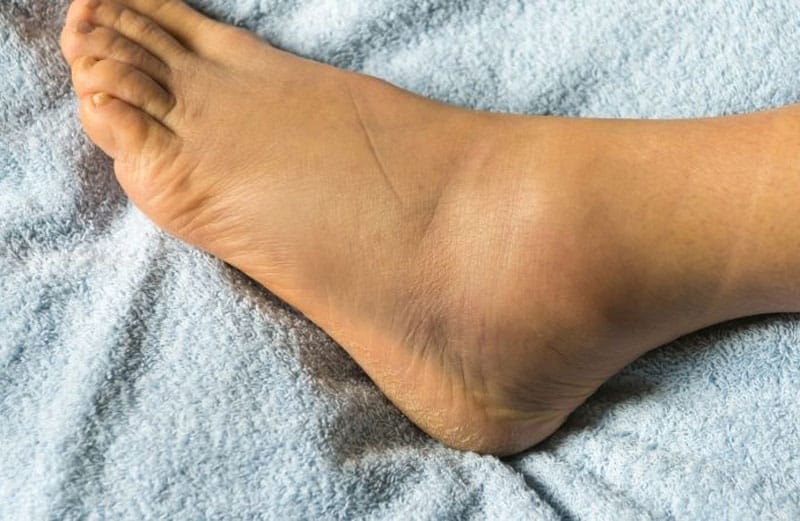
We’ve all been there. You’re in the middle of a game, or simply walking down a curb, and—pop. Your foot rolls, a sharp pain shoots through your leg, and within minutes, your ankle looks like there’s a literal grapefruit under your skin.
The first thing everyone tells you is: “Go home, put some ice on it, and stay off it.” It’s the advice we’ve heard for fifty years. But here is the frustrating truth: if you follow that old-school “Rest and Ice” (R.I.C.E.) protocol, you are likely doubling your ankle sprain recovery time and setting yourself up for a lifetime of wobbly, weak ankles.
At hemanklerehab.com, we believe you deserve a recovery that actually works. It’s time to move beyond the ice pack and embrace the modern science of active, functional rehabilitation. Your ankle isn’t looking for a vacation; it’s looking for the right stimulus to heal itself stronger than before.
The Hidden Dangers of Traditional “Rest and Ice”
The R.I.C.E. method (Rest, Ice, Compression, Elevation) was coined in 1978. Since then, the doctor who created it has actually retracted his recommendation because science has proven that ice and total rest delay healing.
The “Ice Trap” and Inflammation
When you get an ankle sprain, your body initiates an inflammatory response. While we’ve been taught that inflammation is the enemy, it is actually the primary mechanism for healing. Inflammation brings white blood cells (macrophages) to the area to eat up damaged tissue and release growth factors that rebuild your ligaments.
By aggressively icing, you constrict the blood vessels and stop this “cleanup crew” from doing its job. You might numb the pain for twenty minutes, but you are effectively stalling the entire construction process.
The Danger of Prolonged Rest
Total rest is just as damaging. When you stop moving your ankle entirely, several negative things happen:
- Tissue Stiffness: Without movement, the new collagen fibers that heal your ligament are laid down in a messy, disorganized web of scar tissue. This makes your joint stiff and brittle.
- Muscle Atrophy: Your calf and foot muscles begin to weaken in as little as 48 hours. A weak ankle is an unstable ankle.
- The Brace Dependency: Relying on heavy braces for weeks on end creates a “lazy” joint. Your ligaments stop learning how to support your weight because the brace is doing the work, leading to permanent instability.
Warning: If You Neglect Functional Rehab
If you choose to “wait it out” without an active rehab plan, you are at an extremely high risk of developing Chronic Ankle Instability (CAI). This isn’t just a lingering ache; it’s a condition where your brain loses its “GPS connection” to your foot. You’ll find yourself rolling your ankle on flat pavement or feeling “wobbly” in high heels or on grass. Neglect today leads to a cycle of re-injury that can haunt you for years.
What Modern Science Says About Ankle Healing
The shift toward active recovery is backed by the world’s most prestigious medical journals. If you want to get back to your life fast, you have to follow the data.
- Expert Insight #1: The “PEACE & LOVE” Revolution. In 2020, the British Journal of Sports Medicine (BJSM) officially proposed replacing R.I.C.E. with a new acronym: PEACE & LOVE. The “LOVE” stands for Load, Optimism, Vascularization, and Exercise. This science-backed protocol emphasizes that “loading” the joint (putting weight on it) as soon as pain allows is the fastest way to remodel tissue. You can explore the full BJSM PEACE & LOVE protocol here.
- Expert Insight #2: Early Weight-Bearing Wins. Research published in the Journal of Orthopaedic & Sports Physical Therapy (JOSPT) confirms that patients who begin “progressive loading” and functional exercises within the first few days return to work and sports significantly faster than those who practice total immobilization. See the JOSPT Clinical Practice Guidelines.
- Expert Insight #3: The Failure of the Ice Myth. A study featured in the Journal of Athletic Training suggests that ice does not actually improve the quality of tissue repair and may, in fact, lead to lower-quality collagen formation in healing ligaments.
Understanding the Grades of Ankle Sprains
To navigate your ankle sprain recovery, you need to know what you’re dealing with. Ankle sprains are categorized by the amount of damage to the ligaments (usually the ATFL on the outside of the ankle).
- Grade 1 (Mild): Micro-tears in the ligament. You’ll have slight swelling and some tenderness, but you can usually walk on it (with a limp).
- Grade 2 (Moderate): A partial tear of the ligament. Significant swelling, bruising, and pain when you try to put weight on the foot. This is where most people get stuck in the “Rest and Ice” trap.
- Grade 3 (Severe): A full rupture or complete tear. The ankle feels totally unstable, and weight-bearing is nearly impossible initially. While this sounds scary, most Grade 3 sprains respond incredibly well to non-surgical, active rehab.
The Recovery Timeline: “Wait and See” vs. “Active Rehab”
The difference in healing time is staggering when you compare the old way to the functional way. If you are curious about the specific numbers, our guide on how long it takes for a sprained ankle to heal breaks it down by severity.
| Severity | Traditional (Rest/Ice) Timeline | Active Rehab Timeline |
|---|---|---|
| Grade 1 | 2 – 4 Weeks | 3 – 7 Days |
| Grade 2 | 6 – 12 Weeks | 5 – 10 Days |
| Grade 3 | 6 Months – 1 Year | 15 – 30 Days |
The Solution: HEM Ankle Rehab
If you want to stop the pain and ensure your ankle actually heals “smart,” you need a system that works with your body’s natural biology. This is where HEM Ankle Rehab comes in.
Instead of the outdated approach of freezing the joint in time, HEM Ankle Rehab focuses on active, functional restoration. It is designed to be done in the comfort of your own home, without the need for expensive physical therapy appointments, heavy equipment, or bulky braces.
Main Benefits of Functional Rehab
- Reduces Swelling Naturally: By using gentle movement, you activate the “muscle pump” that flushes excess fluid out of your ankle far more effectively than ice ever could.
- Restores Proprioception: It retrains the balance sensors in your feet, so you feel confident on uneven ground. This is vital for preventing weak ankles.
- Flexibility Without Stiffness: By introducing range-of-motion work early, you ensure your ligament heals with flexibility rather than rigid, painful scar tissue.
- Strengthens the “Natural Brace”: We focus on building the actual muscles of the foot and calf so your body can protect itself without needing external tape or wraps.
How to Start Your Recovery (Step-by-Step)
While a full rehab system like HEM is the gold standard, you can begin your journey toward ankle sprain recovery by shifting your mindset today:
1. Stop the Ice
If you are within the first 48 hours, resist the urge to numb the area. If the pain is unbearable, focus on gentle compression and elevation, but allow the body’s natural inflammatory response to begin the repair process.
2. Move Within Your “Pain-Free” Range
As soon as you can move your toes or your ankle even a millimeter without sharp pain, do it. Gentle ankle circles or “alphabet” traces help move fluid and keep the joint from locking up. For more on managing the initial stages, check out our guide on sprained ankle and swelling.
3. Progressive Weight-Bearing
If you can stand with a little weight on your foot, do so. This tells your body: “Hey, we need to build strong tissue here to support this weight.” It’s the mechanical signal your cells need to heal.
People Also Ask (FAQ)
Can I walk on a sprained ankle?
In most cases, yes—and you should walk as much as your pain tolerance allows. “Relative rest” is much better than “total rest.” If you can walk with a slight limp, gentle walking is actually beneficial as it promotes circulation and prevents muscle atrophy. If you can’t put any weight on it at all after 48 hours, see a doctor to rule out a fracture.
Why is my ankle still swollen after two weeks?
Persistent swelling is usually a sign that your lymphatic system is “clogged.” Because you’ve likely been resting or icing, the waste products from the injury have nowhere to go. Functional movement is the only “pump” that can clear that fluid out.
Do I need an X-ray for an ankle sprain?
A good rule of thumb is the “Ottawa Ankle Rules.” If you can’t take four steps immediately after the injury, or if you have pinpoint pain directly on the bony “bumps” of your ankle, it’s worth getting an X-ray to rule out a break.
Are ankle braces good for recovery?
Braces should only be used as a temporary “crutch” for high-risk activities during the early phase. Long-term use of braces is one of the leading causes of permanent ankle weakness. Your goal should be to strengthen your ankle so that you don’t need a brace.
Conclusion: Take Charge of Your Healing
An ankle sprain doesn’t have to be a multi-month disaster. You don’t have to be the person who “used to be active” but now has “bad ankles.” By moving away from the outdated, passive treatments of the past and embracing the power of Active Functional Rehab, you are taking the most important step toward a lifetime of mobility.
Your body was built to move. Don’t let an ice pack and a couch stand in the way of your recovery. Start your journey with HEM Ankle Rehab and get back to the life you love, one stable step at a time.