You’ve just rolled your ankle. It’s painful, it’s a bit puffy, and you’re probably limping. Most people—and even some outdated medical clinics—will tell you to go home, put some ice on it, and stay off it for a week.
As a senior health writer immersed in modern sports medicine, I’m here to tell you: That advice is 40 years out of date.
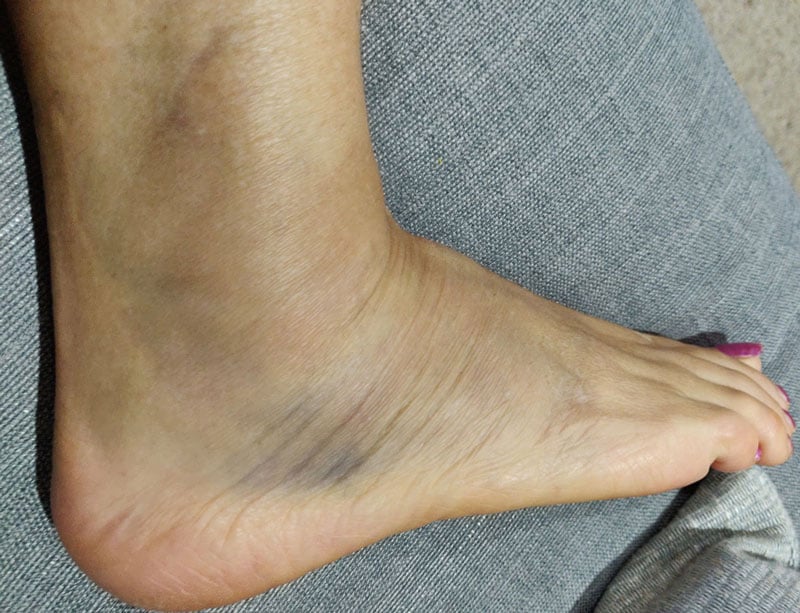
In the world of professional athletics, we don’t “wait and see.” We don’t freeze the joint with ice packs. We use active, functional rehabilitation to turn a 2-week recovery into a 3-day recovery. If you have a grade 1 ankle sprain, you have a golden opportunity to heal your ligaments so they are actually stronger than they were before the injury. But if you follow the old rules, you risk creating a “lazy” joint that is prone to rolling again and again.
In this guide, we’re going to look at the science of why your body needs movement, not rest, and how you can use the HEM Ankle Rehab philosophy to fix your ankle for good.
What Is a Grade 1 Ankle Sprain? (The Modern Definition)
A grade 1 sprain is often called a “mild” sprain, but that’s a bit of a misnomer. While you haven’t completely snapped a ligament (that would be a Grade 3), you have micro-tears and over-stretching of the ligament fibers, usually the Anterior Talofibular Ligament (ATFL) on the outside of the ankle.
Signs You Have a Grade 1 Sprain:
- Mild Swelling: Your ankle looks a bit “thick,” but it isn’t an eggplant-sized balloon.
- Tenderness: It hurts when you press on the bony bump on the outside of your ankle.
- Stability: You can generally stand on the foot, even if walking with a slight limp.
- No Bruising: Usually, grade 1 sprains don’t produce the deep purple bruising seen in more severe tears.
Even though it’s “mild,” it changes how you walk. This “micro-limp” causes a ripple effect of weakness up to your knee and hip. For a deeper breakdown of timelines, check out our guide on ankle sprain recovery and healing fast.
The Science: Why R.I.C.E. Is Dead (And What to Use Instead)
For decades, R.I.C.E. (Rest, Ice, Compression, Elevation) was the law. In 2020, the British Journal of Sports Medicine officially recommended replacing it with PEACE & LOVE.
Expert Insight #1: Ice Stalls the Cleanup Crew
A landmark study in Nature: Scientific Reports found that icing actually prevents macrophages (your body’s internal repair cells) from entering the injured tissue. By numbing the pain with ice, you are literally telling your body’s construction crew to stay home. This leads to a slower, less efficient healing process.
The “PEACE & LOVE” Protocol:
- Protection (Avoid activities that cause sharp pain).
- Elevation (Keep it above the heart).
- Avoid Anti-inflammatories (Ibuprofen actually slows ligament healing).
- Compression (Use a light wrap to manage swelling).
- Education (Listen to your body, not a timer).
And most importantly, the LOVE phase:
- Load (Put weight on it as soon as tolerated).
- Optimism (Your brain controls your pain levels).
- Vascularisation (Get blood moving to the joint).
- Exercise (Functional movement to restore strength).
The Dangers of “Playing It Safe”
1. The Trap of Prolonged Rest
When you sit on the couch for three days, your calf muscles begin to atrophy. More importantly, your ligaments heal in a “shortened” and “stiff” position. Without movement, the new collagen fibers are laid down like a messy pile of sticks rather than a strong, organized bridge. This leads to chronic stiffness that can haunt you for years.
2. The “Crutch” of Ankle Braces
We often see people wearing ankle braces for months after a minor grade 1 sprain. This is a mistake. Ankle braces are like a cast; they do the work so your muscles don’t have to. If you rely on a brace, you are essentially telling your brain that the ankle’s stabilizing muscles are no longer needed. This results in permanent instability. If you want to know how to stop this cycle, read about why you have weak ankles and how to strengthen them.
Main Benefits of Active Rehab for Grade 1 Sprains
Choosing an active, movement-based approach like HEM Ankle Rehab provides benefits that rest simply cannot match:
- Clear Out Debris: Movement acts as a pump for your lymphatic system, flushing out swelling far faster than elevation alone.
- Restore Proprioception: This is your “balance-sense.” Active rehab retrains your brain to know exactly where your foot is, preventing that “oops, I rolled it again” moment.
- Maintain Muscle Tone: By loading the joint early, you prevent the calf and foot muscles from wasting away.
- Prevent Compensatory Pain: Proper rehab ensures you walk normally, protecting your knees and lower back from the strain of a limp.
Warning: What Happens If You Neglect a Grade 1 Sprain?
It is tempting to think, “It’s just a small sprain, it will heal on its own.” While the pain might go away, the weakness remains. Neglecting even a minor sprain is the #1 cause of Chronic Ankle Instability (CAI).
- The Domino Effect: One minor sprain leads to a second, more severe sprain. This eventually leads to a Grade 3 tear or even a fracture.
- Early Arthritis: Unstable joints rub together unevenly. Over time, this grinds down the cartilage, leading to bone-on-bone arthritis in your 40s and 50s.
- Scar Tissue Adhesions: Without mobilization, the “patch” the body builds becomes a permanent block in your range of motion.
The Solution: HEM Ankle Rehab
If you want to recover fully and fast, you need a system that reflects 2026 sports science standards. This is where HEM Ankle Rehab comes in. It is the premier at-home program designed to replace the ineffective “rest and ice” routine with a high-performance functional protocol.
HEM Ankle Rehab focuses on restoring three key pillars:
- Mobility: Unlocking the joint so you can move through a full range of motion without that “stuck” feeling.
- Strength: Rebuilding the actual fibers of the ligament and the surrounding muscles.
- Stability: Retraining the nervous system so your ankle can handle uneven ground, stairs, and sports without fear.
You don’t need expensive physical therapy or heavy equipment. You can do this in your living room in just minutes a day. By following the HEM Ankle Rehab protocol, most people with a grade 1 sprain are back to 100% in as little as 3 to 7 days.
Phase-by-Phase: How to Rehab a Grade 1 Sprain at Home
Expert Insight #2: Loading is Medicine
The 2021 Clinical Practice Guidelines from the Journal of Orthopaedic & Sports Physical Therapy (JOSPT) state that early weight-bearing and functional exercises are highly recommended to improve return-to-work and return-to-sport times for lateral ankle sprains.
Phase 1: Mobilization (Day 1-2)
As soon as you can move your ankle even a millimeter without sharp pain, do it. Use Ankle Alphabets: Imagine your big toe is a pen and “write” the alphabet in the air. This moves the joint in every direction, preventing stiffness and moving fluid out of the area.
Phase 2: Graduated Loading (Day 2-4)
Start with Weight Shifting. Stand with both feet on the floor and slowly shift your weight from your “good” side to your “injured” side. If you feel pain, back off. If it’s just a dull ache, keep going. This tells your body that the ligament needs to be strong enough to hold your weight.
Phase 3: Proprioceptive Training (Day 4+)
This is the most important step. Try standing on just your injured leg for 30 seconds while holding onto a wall. As you get better, let go of the wall. This “re-wires” the connection between your ankle and your brain.
People Also Ask (FAQs)
Can I walk on a grade 1 ankle sprain?
In almost every case, yes. In fact, you should walk as much as your pain tolerance allows. Walking promotes blood flow and keeps your gait mechanics from becoming distorted. If you can walk without a significant limp, keep moving!
Do I need an X-ray for a minor sprain?
Check the “Ottawa Ankle Rules”: If you can take four steps (even with a limp) and you don’t have sharp, pinpoint pain directly on the bony bumps of your ankle, an X-ray is usually not necessary. However, if you are unsure, always consult a professional.
Should I wrap my ankle?
Compression can help manage swelling, but don’t wrap it so tight that you can’t move. Remember, movement is the priority. A light compression sleeve is often better than a rigid brace for grade 1 injuries.
The Bottom Line
A grade 1 ankle sprain is a minor injury that can become a major problem if handled poorly. By ditching the ice pack, avoiding total rest, and embracing active, functional rehab, you can ensure your ankle is stable, strong, and ready for action.
Don’t leave your recovery to chance. Get back to your life faster with HEM ANKLE REHAB. Your journey to a 100% recovery starts now.