If you are reading this, you probably know that ankle nerve pain is completely different from a standard muscle ache. Instead of a dull throb, you are dealing with sharp, shooting pains, a deep burning sensation, or frustrating numbness and tingling that radiates down your foot. It can feel like an electric shock every time you take a step, making normal walking, exercising, or even just standing incredibly difficult.
It’s an isolating experience. Most people—and even some outdated medical clinics—will tell you to “just rest it.” But you’ve likely noticed that the more you rest, the more “stuck” and sensitive your ankle feels.
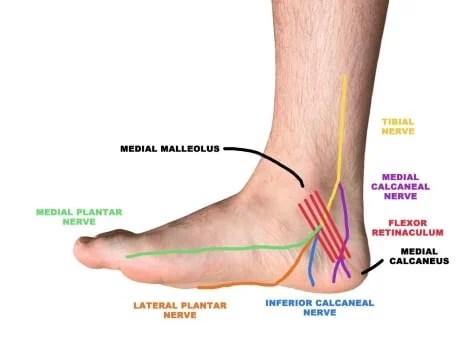
You are not alone, and it is entirely understandable if you feel stressed by this lingering pain. For decades, the standard advice was to ice it, wrap it up, and wait. But in 2026, we know that nerves are like high-speed data cables: they require constant blood flow and space to “glide” through your joints. If they are compressed by stagnant swelling or stiffened by lack of movement, they short-circuit.
The good news? The sports medicine landscape has evolved. By adopting the latest functional rehabilitation standards, you can stop relying on temporary fixes. In this guide, we will break down exactly what is causing your ankle nerve pain, why methods like the R.I.C.E. protocol are sabotaging your recovery, and how active rehab can permanently relieve the pressure on your nerves.
Understanding Ankle Nerve Pain: What Is Happening?
Healthy ankles provide the crucial stability and flexibility your body needs to walk and run. They act as the foundational shock absorbers for your entire body. However, when the structural integrity of your ankle is compromised—often due to old injuries like weak ankles that never healed properly—it creates a mechanical bottleneck.
Ankle nerve pain typically arises when the delicate nerves passing through the ankle region (like the Tibial or Peroneal nerves) become compressed, stretched, or irritated by surrounding tissues. Because nerves are highly sensitive, even a small amount of abnormal pressure from old scar tissue or chronic inflammation can trigger intense pain signals.
Common Symptoms of Nerve Damage in the Ankle
- Numbness or Tingling: Often described as your foot “falling asleep” or a persistent “pins and needles” sensation.
- Burning Sensation: A feeling of intense heat, particularly along the inside of the ankle or the sole of the foot.
- Shooting Pain: Sudden, sharp, electric-like pains that radiate from the ankle down into the toes.
- Weakness and “Drop Foot”: The muscles surrounding the ankle may feel weak, leading to sudden instability.
The Inner Ankle Connection: Tarsal Tunnel Syndrome
One of the most common complaints is inner ankle nerve pain. This is usually related to the tibial nerve, which runs through a narrow pathway called the tarsal tunnel. When the ankle is weak or chronically inflamed from a previous bruised ankle or sprain, the surrounding tissues swell and compress this nerve. If your ankle collapses inward (overpronation) due to ligament weakness, it constantly stretches and irritates this nerve with every step.
Warning: The Dangers of Resting and Bracing
If you are dealing with nerve pain, your first instinct might be to sit on the couch and throw on a heavy ankle brace. In 2026, we know this is a mistake.
The Problem with Icing and Resting
When you ice a sprained ankle or nerve injury, you severely restrict blood flow. Nerves require a massive amount of oxygen and healthy blood circulation (vasodilation) to heal. By freezing the area, you are literally starving the nerve of the nutrients it needs to repair its protective myelin sheath.
Prolonged rest leads to:
- Joint Stiffness: Without movement, joint fluid thickens, causing the pathway around the nerve to narrow.
- Scar Tissue Adhesions: Old injuries leave behind disorganized scar tissue. Without movement, this tissue hardens and physically “pins” the nerve down.
- Muscle Atrophy: Your stabilizing muscles shrink rapidly when not used, forcing your bones to absorb all the impact, which directly irritates the nerves.
The Danger of Ankle Braces
Relying on ankle braces acts as a crutch. Over time, your brain realizes the brace is doing the work and stops sending signals to your stabilizing muscles. This leads to permanent joint instability. Furthermore, a tight, restrictive brace physically compresses the ankle, which can actually worsen nerve impingement by narrowing the tarsal tunnel.
Modern Science: The 2026 Shift to “Nerve Gliding”
Contemporary research proves that nerves need to glide freely and receive ample blood flow to stay healthy. Here are the latest expert insights:
Expert Insight 1: Neurodynamics and Nerve Gliding
A study published in Frontiers in Physiology (PMC7004603) demonstrates that “nerve gliding” or mobilization exercises significantly reduce neural mechanosensitivity. This means that by gently moving the nerve, you reduce the “alarm” signals the brain sends out as pain. Explore the study on neural mobilization.
Expert Insight 2: Mechanotransduction in Nerve Healing
Research on PubMed (PMC10303014) highlights that mechanical loading (gentle weight-bearing) triggers mechanotransduction—a cellular process that converts movement into healing signals. Total rest stops this process, while active rehab accelerates it. Read the research on mechanotransduction and nerve repair.
Expert Insight 3: The Failure of Cryotherapy for Nerves
The Journal of Athletic Training emphasizes that while ice may numb pain, it slows down nerve conduction velocity and delays the metabolic processes required for nerve regeneration. For nerve pain, blood flow is the priority. View the JAT guidelines on active recovery.
Main Benefits of Active, Functional Rehab
By switching from passive rest to an active sprained ankle treatment, you will experience:
- Rapid Pain Relief: Improved blood flow immediately calms hyperactive, irritated nerves.
- Elimination of Numbness: Freeing the nerve from compressed scar tissue restores normal sensation to your toes.
- Bulletproof Stability: Building real muscle strength completely eliminates the need for restrictive ankle braces.
- Long-Term Joint Health: Proper mechanics protect your knees and hips from future compensatory injuries.
The Solution: How to Relieve Ankle Nerve Pain Fast
To fix ankle nerve pain, you must treat the root cause: joint instability and poor tissue health. Here is the framework for recovery:
- Active Mobility: Instead of resting, introduce gentle, pain-free movement. Mobility exercises act like a natural pump, flushing out stagnant swelling that is pressing on the nerve.
- Soft Tissue Release: Safe, targeted therapy around the calf and foot can release tight muscle fascia that is contributing to nerve compression.
- Progressive Strengthening: You must rebuild the “natural brace” of your ankle. Strengthening the tibialis anterior and peroneal muscles ensures the joint stays in perfect alignment.
- Neuromuscular Balance Training: Restoring your proprioception ensures your foot naturally reacts to uneven ground without collapsing inward and aggravating the tibial nerve.
HEM Ankle Rehab: The Premier At-Home Solution
You don’t need to spend thousands of dollars at a physical therapy clinic to achieve these results. The most effective way to eliminate ankle nerve pain and restore total joint health is by using HEM Ankle Rehab.
Unlike outdated methods that tell you to stay off your feet, HEM actively encourages the exact movements, soft tissue techniques, and ankle sprain rehab exercises required to restore normal nerve function. It is specifically designed to address the underlying weakness that causes nerve compression in the first place.
Whether you are dealing with burning pain from a grade 2 ankle sprain or chronic numbness from an old injury, HEM provides a comprehensive, easy-to-follow solution that goes far beyond temporary pain relief. It restores your natural movement, so you can finally get back to living your life pain-free.
People Also Ask (FAQ)
How long does it take for ankle nerve pain to heal?
Nerves heal slower than muscles, but you can experience significant pain reduction within just 2 to 3 weeks of starting an active rehab program like HEM. Complete restoration can take 4 to 8 weeks, but “waiting for it to go away” with rest often results in pain that lingers for years.
Can a pinched nerve in the ankle cause foot pain?
Absolutely. Because the nerves in your ankle branch down into the sole of your foot, compression at the joint will shoot pain, burning, or numbness directly into your heel, arch, and toes. This is often misdiagnosed as Plantar Fasciitis.
Is heat or ice better for ankle nerve pain?
Ice is generally terrible for nerve pain because it restricts blood flow and stiffens the joint. Gentle, warm heat is better as it encourages vasodilation, but active movement is the most powerful tool for generating healthy, internal heat and circulation.
Should I walk if I have nerve pain?
Yes, but you should use the proper walking mechanics. Walking encourages the blood flow necessary for nerve healing. If walking causes sharp, severe pain, focus on the non-weight-bearing mobility protocols found in HEM until your joint is ready.
Disclaimer: The information provided in this article is for educational purposes only and does not substitute for professional medical advice. Always consult a healthcare provider for a proper diagnosis—especially to rule out fractures—before beginning any rehabilitation program.