You just rolled your ankle. It’s throbbing, it’s turning a lovely shade of purple, and it’s doubling in size by the minute. Your first instinct? Grab a bag of frozen peas, sit on the couch, and keep that foot elevated for the next three days. That’s what we’ve all been told since the 1970s, right? R.I.C.E.—Rest, Ice, Compression, and Elevation—is the golden rule of sports medicine.
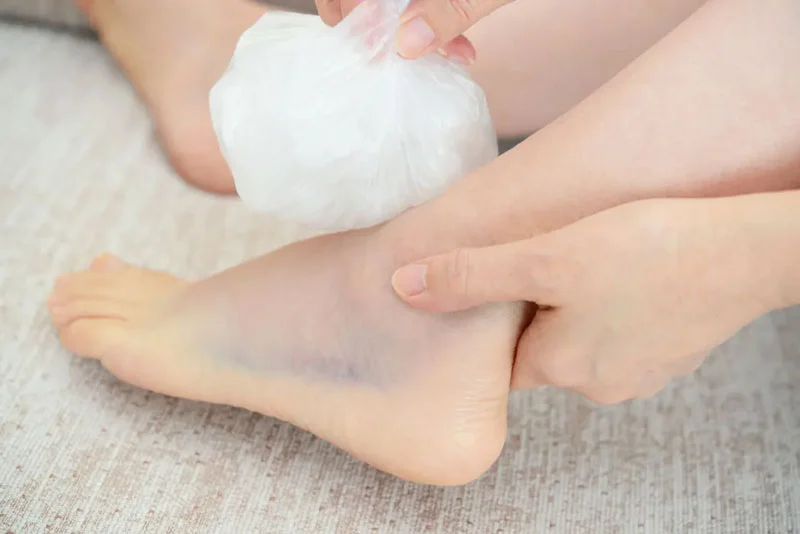
But what if I told you that by reaching for that ice pack, you might actually be hitting the “pause” button on your body’s natural healing process?
It sounds like heresy, but modern science is sounding the alarm: ice might delay ankle healing. While it’s great for numbing the pain in the short term, the long-term cost to your ligaments and muscle strength might be higher than you think. Today, we’re diving into the shift from the old-school R.I.C.E. method to the modern, active approach known as M.E.T.H. (Movement, Elevation, Traction, Heat) and why staying mobile is the real secret to getting back on your feet.
The Shocking Truth: Even the “Father of R.I.C.E.” Changed His Mind
To understand why we’re moving away from ice, we have to go back to 1978. Dr. Gabe Mirkin coined the term R.I.C.E. in his best-selling Sportsmedicine Book. It became the law of the land for every coach, trainer, and parent on the planet.
However, in 2014, Dr. Mirkin did something rare in the medical world: he admitted he was wrong. In a widely cited article on his own website, Dr. Mirkin stated that both ice and complete rest may actually delay healing instead of helping it.
He pointed to research showing that when you ice an injury, you’re not just stopping the swelling—you’re stopping the “clean-up crew” (your inflammatory cells) from doing their job. Healing requires inflammation. Without it, the repair process can’t truly begin.
The Science of Why Ice Might Delay Ankle Healing
When you sprain your ankle, your body sends specialized white blood cells called macrophages to the site. These cells release a hormone called Insulin-like Growth Factor (IGF-1), which is essential for repairing damaged tissue.
Here is where the problem starts: ice causes vasoconstriction. This means your blood vessels shrink, cutting off the very “highway” those macrophages need to travel on to reach your ankle.
- Delayed Response: Studies published in the American Journal of Sports Medicine have suggested that while cooling might delay swelling, it does not hasten recovery from muscle and ligament damage.
- Nerve Interference: Excessive icing can also lead to nerve damage and a decrease in the coordination and strength required for functional movement.
- Lymphatic Drainage: The lymphatic system is responsible for removing waste and excess fluid from the injury. Unlike the heart, the lymphatic system doesn’t have a pump; it relies on muscle movement to “push” fluid out. By icing and resting, you’re effectively turning off the only pump your body has to reduce swelling naturally.
The Dangers of “The Big Rest” and Chronic Bracing
If ice is the first half of the problem, the “R” in R.I.C.E. (Rest) is the second. We often think that by staying completely still, we are protecting our injury. In reality, prolonged rest is one of the worst things you can do for a sprained ankle.
The Trap of Stiffness and Scar Tissue
When an ankle stays immobile for too long, the body lays down collagen fibers in a messy, haphazard way. This results in thick scar tissue that lacks the elasticity of a healthy ligament. This is why many people find that even months after a sprain, their ankle feels “tight” or “stiff.” They didn’t move it enough during the healing phase to “train” those new fibers to align correctly.
The Ankle Brace Addiction
Another common mistake is relying on heavy-duty ankle braces. While they offer a sense of security, they often act as a crutch that causes your muscles to “turn off.” When you rely on ankle braces, the supporting muscles in your lower leg begin to atrophy (weaken). This creates a dangerous cycle where your ankle becomes more unstable because it’s no longer strong enough to support itself without the brace.
The Modern Solution: M.E.T.H. and Active Recovery
So, if we aren’t supposed to ice and rest, what should we do? The shift in sports medicine is toward active, functional rehabilitation. The British Journal of Sports Medicine (BJSM) recently introduced a new acronym that is even more comprehensive: PEACE & LOVE.
However, many athletes prefer the simplicity of M.E.T.H.:
- Movement: Gentle, pain-free range of motion exercises to keep the joint mobile and prevent stiffness.
- Elevation: Keeping the ankle above the heart to let gravity assist with fluid drainage (this is the one part of R.I.C.E. that still stands!).
- Traction: Gentle manual techniques or movements that help “decompress” the joint.
- Heat: Once the initial acute phase is managed, heat can help increase blood flow to the area, delivering the nutrients needed for tissue repair.
By focusing on movement rather than immobilization, you are encouraging the body to heal while in motion. This leads to stronger ligaments, better balance, and a much faster return to your favorite activities.
Main Benefits of Active Functional Rehab
Switching your mindset from “protection” to “progression” offers several massive advantages:
- Faster Recovery Time: By increasing circulation rather than stopping it, you provide the “fuel” your body needs to rebuild.
- Prevention of Chronic Instability: Proper movement prevents the “loose” feeling that often follows a poorly rehabilitated sprain.
- Reduced Scar Tissue: Movement ensures that your new ligament fibers grow in a flexible, functional pattern.
- Natural Swelling Reduction: Using your muscles as a “pump” is the most effective way to clear out the “junk” from an injury.
Warning: What Happens If You Neglect Your Recovery?
If you simply “wait it out” or rely solely on ice and rest, you are setting yourself up for long-term issues. Chronic ankle instability is a condition where the ankle repeatedly “gives way” during normal activity.
Neglected injuries can lead to:
- Muscle Atrophy: Your calf and foot muscles become weak, leaving the joint unprotected.
- Loss of Proprioception: This is your brain’s ability to know where your foot is in space. Without it, you are significantly more likely to re-sprain the ankle.
- Arthritis: An unstable joint wears down faster, leading to early-onset joint pain and degeneration.
The Best Way to Heal: HEM Ankle Rehab
If you’re feeling overwhelmed by all the conflicting advice, you don’t have to figure it out alone. The HEM Ankle Rehab program was designed specifically to align with these modern standards of active, functional healing.
Instead of the outdated “ice and wait” approach, HEM guides you through a system that focuses on restoring full mobility, strength, and stability from the comfort of your own home. It addresses the root cause of the injury and ensures that your ankle doesn’t just “feel better,” but actually is better. Whether you have a fresh sprain or an old injury that never quite healed, using a structured rehab program is the fastest way to reclaim your mobility.
Common Questions About Ankle Healing (FAQ)
Is ice ever okay to use?
Ice is an excellent analgesic (pain reliever). If your pain is so severe that you cannot sleep or function, using ice for no more than 10 minutes at a time may help dull the sensation. However, you should realize that you are using it for pain management, not for “healing.”
How soon can I start moving my ankle after a sprain?
In most cases, you can begin very gentle, non-weight-bearing movements (like tracing the alphabet with your toes) within 24–48 hours. Always let pain be your guide. If a movement causes sharp, stabbing pain, back off.
Will heat make the swelling worse?
In the very first few hours, heat might increase the initial flow of blood to the area, which can increase the feeling of pressure. Most experts recommend waiting 48–72 hours before applying significant heat. Once the initial “crisis” has passed, heat is your best friend for promoting the circulation needed for repair.
Why does my ankle still hurt months later?
This is often due to the formation of restrictive scar tissue or a loss of strength in the supporting muscles. This is a sign that the injury was not fully rehabilitated. It is never too late to start an active rehab program to break down that stiffness and rebuild stability.
Final Thoughts
It’s time to retire the ice pack and the “rest-only” mindset. Your body is a healing machine, but it needs the right environment to do its job. By choosing movement over stagnation, you are giving your ligaments the best possible chance at a full, strong recovery. Don’t let your injury become a permanent weakness—take an active role in your healing today.
Ready to get started? Check out how HEM Ankle Rehab can help you get back to the activities you love, faster than you ever thought possible.