Have you recently heard that awful “pop,” followed by a wave of intense pain, and now you are staring down at a swollen, bruised foot. We know exactly how frustrating, painful, and scary a severe sprained ankle can be. It instantly derails your daily routine, your workouts, and your peace of mind. You might be wondering if you’ll ever get back to 100%.
Here is the reality: the old-school advice you were probably given—to just sit on the couch, ice your ankle, and wait it out—is not only outdated, but it could actually be sabotaging your recovery. In fact, 2026 sports medicine standards have completely shifted away from the “wait and see” approach.
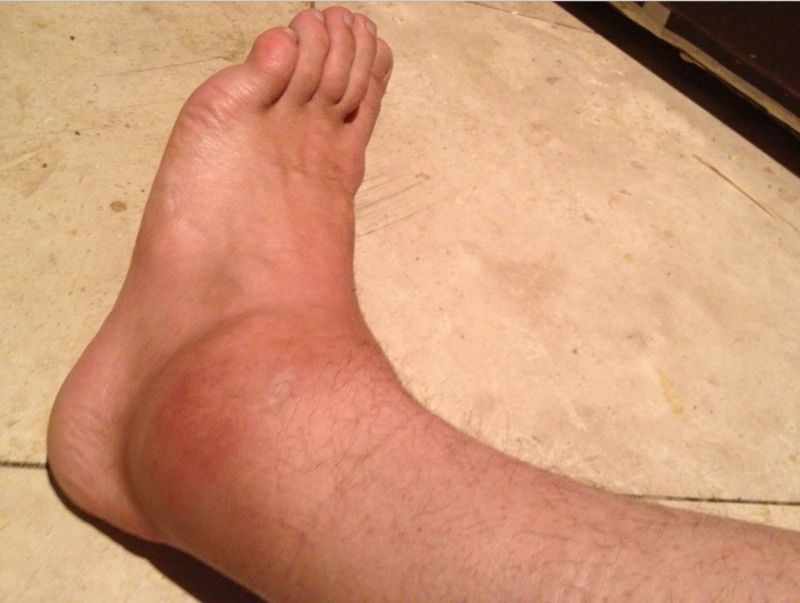
The good news? You do not have to settle for weeks of stiffness or a lifetime of weak ankles. By understanding the true severity of your injury and applying modern, active rehabilitation techniques, you can heal faster and build an ankle that is stronger than before. Let’s dive into exactly what happens during a severe ankle sprain and, most importantly, the step-by-step solution to fix it.
Understanding Your Injury: What Happens During a Severe Sprained Ankle?
An ankle sprain occurs when the ligaments—the tough bands of tissue that connect your bones and support your joint—are stretched beyond their normal limits or torn, usually due to a sudden twist, roll, or awkward landing.
While injuries on the outside (lateral) of the ankle are the most common, sprains are categorized into three grades based on the extent of the damage:
- Grade 1 (Mild): Slight stretching and microscopic tears in the ligament fibers. You’ll experience mild tenderness and minimal swelling.
- Grade 2 (Moderate): Partial tearing of the ligament. This brings moderate pain, swelling, bruising, and some instability when you try to walk.
- Grade 3 (Severe): A complete tear (rupture) of the ligament. This is a severe sprained ankle, resulting in massive swelling, deep bruising, and significant joint instability.
Telltale Signs and Symptoms of a Severe Sprain
How do you know if you are dealing with a Grade 3 rupture rather than a minor tweak? Look for these distinct signs:
- Unusual Swelling and Deep Bruising: In a severe sprain, the ligaments are completely compromised, leading to immediate and intense inflammation. Blood vessels break beneath the skin, causing dark, spreading bruises that can extend down to your toes or up your calf.
- Inability to Bear Weight: If the pain and instability make standing or walking agonizing (or physically impossible), you are likely dealing with a severe sprain. The structural integrity of your ankle has been compromised.
- Prolonged Pain and “Giving Way”: A mild sprain might feel better in a few days. A severe sprained ankle will leave you with persistent, throbbing pain and a terrifying sensation that the ankle will simply “give out” if you try to use it.
⚠️ The Warning: What Happens If You Neglect a Severe Ankle Sprain?
We need to be entirely honest with you: ignoring a severe ankle sprain or treating it with outdated methods is a recipe for disaster. If you simply wait for the pain to fade without properly rehabilitating the joint, you are risking Chronic Ankle Instability (CAI).
When ligaments heal passively, they often heal loosely and are covered in rigid, inflexible scar tissue. This leaves your ankle permanently weak, meaning you are highly likely to sprain it again just by stepping off a curb incorrectly. Over time, chronic instability leads to joint degradation, loss of mobility, and early-onset arthritis.
Modern Science: Why You Need to Ditch R.I.C.E., Rest, and Braces
For decades, doctors and physical therapists handed out the exact same acronym for an ankle sprain: R.I.C.E. (Rest, Ice, Compression, Elevation). But as of 2026, the sports medicine community has completely abandoned this protocol.
Why? Because science has proven that aggressive resting and icing actually delay the healing process. When you apply ice, you constrict blood vessels, trapping cellular waste and swelling inside the joint while preventing fresh, nutrient-rich blood from entering to repair the torn ligaments.
The Dangers of Resting Too Long
Total rest is the enemy of recovery. When you immobilize a severe sprained ankle for too long, you trigger a cascade of negative side effects:
- Muscle Atrophy: The muscles surrounding your ankle and calf begin to shrink and weaken within just a few days of total inactivity.
- Joint Stiffness: Without movement, the joint capsule tightens up, severely limiting your range of motion.
- Brittle Scar Tissue: Ligaments need mechanical stress to heal correctly. If you rest completely, scar tissue forms in a chaotic, tangled web. Movement aligns the repairing tissue, making the ligament strong and flexible again.
The Risks of Relying on Ankle Braces
Many people slap a tight, rigid brace on their ankle and call it a day. While a brace or walking boot might be briefly necessary in the first 24-48 hours of a traumatic Grade 3 tear, relying on braces long-term guarantees permanent weakness. Braces act like a crutch. They do the work of your muscles and ligaments, causing your natural stabilizing muscles to “fall asleep” and weaken. The moment you take the brace off to play a sport or run, your ankle is completely unprotected by your own body.
Expert Insights and the 2026 Shift to Active Recovery
The medical literature backs this up emphatically. Today’s top-tier rehabilitation focuses on “Mechanical Loading” and functional movement rather than immobilization.
- Early Mobilization Accelerates Healing: A landmark consensus statement published in the British Journal of Sports Medicine (BJSM) highlights that replacing “Rest” with “Optimal Loading” (safe, pain-free movement) significantly reduces recovery time and prevents chronic instability compared to prolonged immobilization.
- Bracing Causes Proprioceptive Deficits: Research in the Journal of Athletic Training has demonstrated that prolonged use of rigid prophylactic ankle braces reduces muscle activation patterns, stripping the ankle of its natural ability to sense and react to uneven surfaces (proprioception).
The Solution: Active Functional Rehab
If rest and ice are out, what is the right way to heal a severe sprained ankle? The answer is Active, Functional Rehabilitation.
By safely engaging the muscles, tendons, and ligaments surrounding the ankle, you promote healthy blood flow, naturally flush out swelling, and rebuild the structural integrity of the joint.
The Main Benefits of Active Rehab
- Rapid Swelling Reduction: Movement acts as a natural pump, pushing stagnant fluid and swelling out of the joint through the lymphatic system.
- Stronger Ligament Repair: Gentle, controlled movements force the newly forming tissue to align properly, resulting in a flexible, resilient ligament rather than a brittle clump of scar tissue.
- Restored Balance and Proprioception: Active rehab retrains your brain to communicate with your ankle, restoring your balance and preventing future rolled ankles.
- Pain Relief: Healthy blood flow brings oxygen and nutrients to the injury site, which naturally soothes damaged nerves and reduces throbbing pain.
How to Start Active Recovery Safely
You shouldn’t go for a jog on a fresh Grade 3 sprain, but you can start micro-movements almost immediately. Once serious fractures have been ruled out by a medical professional, you can begin with non-weight-bearing exercises.
- Ankle Pumps: While seated or lying down, gently point your toes away from you, then pull them back toward your shin. Do this 10-15 times. This activates the calf muscle to pump out swelling.
- Alphabet Exercise: Pretend your big toe is a pen. Slowly “write” the alphabet in the air. This promotes multi-directional range of motion without bearing weight.
- Seated Towel Scrunches: Place a towel on the floor, keep your heel down, and use your toes to scrunch the towel toward you. This rebuilds the small, stabilizing muscles in the arch of your foot.
For more detailed exercises and recovery tips, be sure to check out our comprehensive recovery blog.
Managing Sprained Ankles at Home with HEM Ankle Rehab
Knowing that active rehab is the key to recovery is one thing; putting it into a safe, structured, daily routine is another. That is exactly why we created the HEM Ankle Rehab system.
Positioned as the premier at-home treatment for any type of sprained ankle, HEM takes the guesswork out of your recovery. We leave the outdated R.I.C.E. method in the past where it belongs. Instead, HEM focuses entirely on modern sports science:
- H – Healthy Blood Flow: We teach you specific techniques to stimulate fresh, nutrient-rich blood flow to the injury site to accelerate cellular repair.
- E – Eliminate Swelling: Using active movement and targeted flushes, we help you clear out the massive swelling associated with severe sprains naturally.
- M – Restore Mobility: Through our progressive, step-by-step exercise system, you will safely rebuild your range of motion, strength, and balance, ensuring your ankle is highly resistant to future injuries.
Whether you are dealing with a mild tweak or a severe sprained ankle, HEM Ankle Rehab allows you to take control of your healing process from the comfort of your living room, without the need for expensive physical therapy appointments or damaging ankle braces.
People Also Ask (FAQs)
Can a severe sprained ankle heal on its own?
It will “scar over” on its own, but it will not heal correctly without intervention. If you leave a severe sprain to heal passively, you will likely develop thick scar tissue, limited mobility, and chronic ankle instability. Active rehabilitation is required to heal properly and regain full strength.
How long does a Grade 3 severe sprain take to heal?
The timeline heavily depends on your approach. With passive rest, a Grade 3 sprain can haunt you with pain and weakness for months or even years. However, by utilizing a progressive, active system like HEM Ankle Rehab, patients often see dramatic improvements in mobility and pain reduction within a matter of weeks, allowing for a much faster, safer return to normal activities.
Should I wear an ankle brace to bed?
No. Unless specifically instructed by a surgeon following an operation or for a severe fracture, wearing a brace to bed is unnecessary and counterproductive. Your body needs unimpeded circulation to heal while you sleep. A tight brace can restrict blood flow and increase joint stiffness by the morning.
Is walking on a sprained ankle good for it?
Once you are cleared of broken bones and can bear weight without excruciating, sharp pain, walking with proper form can be beneficial. It acts as a natural mechanical load that signals the ligaments to strengthen. However, you must avoid limping heavily, as this alters your biomechanics and can cause knee or hip pain. Start with partial weight-bearing and transition to full walking as your strength improves through active rehab.
Ready to ditch the ice and take control of your recovery? Don’t let a severe sprained ankle keep you on the sidelines indefinitely. Start healing the right way, right now. Join the thousands of people who have successfully rebuilt their ankles with HEM Ankle Rehab.