Are your flat feet causing more than just a “tired” feeling at the end of the day? Pes Planus (the medical term for flat feet) isn’t just about how your foot looks; it’s about how your entire body moves. If you’ve been told to “just wear orthotics” or “rest it,” you’re missing the most important part of the puzzle: active restoration.
Let’s dive into the modern sports science that proves you can strengthen your arches, reduce pain, and reclaim your mobility without relying on clunky braces or outdated “ice and rest” protocols. Discover the functional path to stronger, more resilient feet today.

Pes Planus: The Modern Guide to Fixing Flat Feet (Without the Clunky Braces)
If you’ve ever looked down and noticed that the entire sole of your foot is pancaked against the floor, you’re not alone. Pes Planus, or flat feet, is one of the most common structural issues in the world of podiatry. But here’s the problem: for decades, the “solution” was to stick a piece of plastic (an orthotic) under the foot and tell the patient to “take it easy.”
As a senior health writer, I can tell you that modern sports medicine has moved far beyond that passive approach. We now know that your feet aren’t just “blocks” of bone and skin—they are dynamic, muscular powerhouses. When they fail, it’s often because the internal support system has gone “offline.”
In this article, we’re going to look at why your arches collapsed, the real science of how to fix them, and why the old-school advice of R.I.C.E. (Rest, Ice, Compression, Elevation) is actually making your flat feet worse.
What is Pes Planus? (It’s Not Just a Flat Foot)
The Two Types of Flat Feet
Not all flat feet are created equal. To fix the problem, you first need to know what you’re dealing with:
- Flexible Pes Planus: This is the most common. When you sit down and take the weight off your foot, an arch appears. But the moment you stand up, it disappears. This is primarily a functional issue—your muscles and ligaments aren’t doing their job to hold the arch under load.
- Rigid Pes Planus: The arch is absent whether you are standing or sitting. This is usually a structural or “bony” issue, often present from birth or the result of severe trauma.
The good news? Most people fall into the “flexible” category, which means the arch can be improved through active, functional rehabilitation.
Expert Insight #1: The Power of Intrinsic Muscles
A landmark 2026 review published in The National Institutes of Health (PMC) highlights that “Short Foot Exercises” (SFE) are now considered the gold standard for non-invasive arch rehabilitation. The study confirms that by actively training the small “intrinsic” muscles of the foot, patients can significantly increase arch height and improve balance in as little as 4–8 weeks.
—
The “Old School” Trap: Why Rest and Braces Are Failing You
If you go to a traditional doctor for Pes Planus, they might suggest a brace or total rest. Here is why that advice is outdated and potentially dangerous for your long-term health:
1. The Danger of Total Rest
When you rest your feet for too long, your body follows the “use it or lose it” principle. Atrophy begins in the tiny muscles that support your arch. Within days, your ligaments can become stiff and “bound up” with disorganized scar tissue. Instead of healing, your foot becomes a rigid, weak structure that is even less capable of absorbing shock when you finally do try to walk.
2. The Risks of Ankle Braces and Heavy Orthotics
Think of an ankle brace or a high-arch orthotic like a crutch. While they might provide temporary relief, they essentially “turn off” your muscles. If you rely on them 24/7, your brain stops sending signals to the foot muscles to stabilize themselves. This leads to permanent instability and a cycle of chronic pain. If you want to understand more about why your joints feel “loose,” check out our guide on why you have weak ankles.
3. Why We Don’t Use R.I.C.E. Anymore
We strictly avoid recommending R.I.C.E. because modern research shows that ice slows down the healing process. Inflammation is actually the body’s signaling system to send repair cells (macrophages) to the area. By icing, you constrict blood flow and prevent those repair cells from doing their job. To see how we approach recovery without these old-school myths, read about how to heal a sprained ankle fast.
—
Main Benefits of Active, Functional Rehab
Switching from a “passive” (waiting for it to get better) to an “active” approach for Pes Planus offers massive benefits:
- Arch Resilience: You build muscles that naturally lift the arch, reducing the need for expensive custom shoes.
- Kinetic Chain Alignment: Fixing the foot often resolves phantom pain in the knees, hips, and lower back.
- Increased Proprioception: You improve your “balance-sense,” making you less likely to suffer from future unexplained ankle pain or rolls.
- Vascularization: Movement pumps nutrient-rich blood into the tendons, which have naturally poor blood supply.
Warning: What Happens If You Neglect Your Arches?
Pes Planus is often progressive. If you ignore the flattening of your feet or simply try to “mask” the pain with ibuprofen, you are setting yourself up for:
- Posterior Tibial Tendon Dysfunction (PTTD): This is the “main hoist” of your arch. If it overworks for too long, it can rupture, leading to a permanent “flatfoot deformity.”
- Knee and Hip Degeneration: When your foot rolls in (overpronation), it forces your knee to rotate inward, which grinds the cartilage and leads to early-onset arthritis.
- Plantar Fasciitis: A collapsed arch puts immense tension on the bottom of the foot, leading to that “stabbing” heel pain in the morning.
—
Modern Science: Why “Loading” is the Key
Recent sports medicine standards suggest that the best way to “fix” a joint is to load it. This means putting controlled stress on the tissues to force them to adapt and get stronger.
Expert Insight #2: Active vs. Passive Interventions
A 2025 meta-analysis found in MDPI Journal compared active interventions (exercise) to passive ones (orthotics alone). The researchers concluded that active exercise alone was more effective at reducing long-term pain and improving foot function than simply wearing insoles.
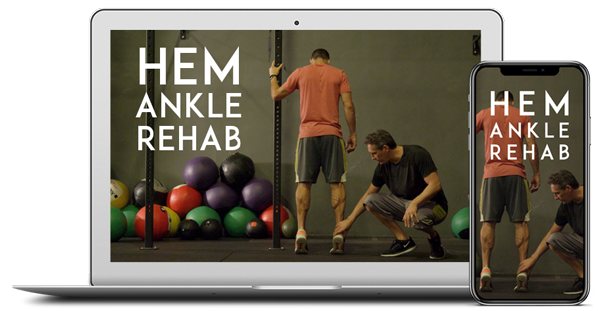
This is where functional rehab comes in. By using a system like HEM Ankle Rehab, you aren’t just babying the foot; you are retraining the entire ankle and foot complex to work as a unified, stable unit. This is the premier at-home treatment for anyone suffering from the fallout of Pes Planus or recurrent ankle sprains.
—
How to Rebuild Your Arch (Functional Strategies)
If you want to move away from the “flat foot” life, you need to incorporate these functional concepts into your daily routine:
1. Wake Up the “Intrinsic” Muscles
Most people can’t even move their big toe independently. Learning to “grip” the floor with your toes (without curling them) is the first step toward rebuilding the arch. This “Short Foot” posture creates a stable base for every step you take.
2. Stretch the Calves (The “Arch Killers”)
If your calf muscles are tight, they pull on the heel bone and force the foot into a flat position. You cannot have a healthy arch if your calves are like bricks. However, don’t just “hold a stretch”—you need dynamic movement to ensure the tissue stays pliable.
3. Functional Loading
Instead of sitting on a leg press, work on single-leg balance. This forces the tiny stabilizers in your ankle to fire. This is a core component of the HEM Ankle Rehab philosophy: teaching the body to support itself through movement.
—
People Also Ask (FAQs)
Can adults really “fix” flat feet?
While you may not fundamentally change the bone structure of a rigid flat foot, most adults can significantly improve their functional arch. By strengthening the muscles, you can prevent the arch from collapsing under your weight, which eliminates the pain associated with Pes Planus.
Are expensive custom orthotics necessary?
For most people, no. Science is increasingly showing that unless you have a severe deformity, a progressive strengthening program is more effective long-term. Orthotics provide a “floor,” but rehab provides the “ceiling.”
Why do my flat feet cause back pain?
Your feet are the foundation. When they collapse inward, it creates a “knock-knee” effect, which tilts your pelvis forward. This increases the curve in your lower back, leading to chronic strain. Fix the feet, and the back often follows.
—
The Solution: Take Action Today
Don’t wait for your arches to collapse further. The journey from painful Pes Planus to strong, athletic feet doesn’t happen by resting—it happens by rehabilitating.
If you are tired of the “wait and see” approach and want a proven, at-home system to strengthen your ankles and feet, the HEM Ankle Rehab program is your answer. It’s designed to get you moving again by focusing on what your body can do, rather than just masking what it can’t.
Stop babying your feet and start building them. Get the HEM Ankle Rehab program today!
—
Author’s Note: Always consult with a healthcare professional before starting a new exercise regimen, especially if you suspect a rigid deformity or a complete tendon tear.