If you’ve recently been diagnosed with a grade 3 ankle sprain, we know exactly how stressed, frustrated, and in pain you are right now. You are likely wondering if you’ll ever walk normally again, if you need surgery, or how long this nightmare is going to last.
First, take a deep breath. A completely torn ligament is a severe injury, but it is highly treatable. However, if you want to heal quickly and get back to your normal life, you have to leave outdated advice in the past. In this comprehensive 2026 guide, we are going to break down exactly what is happening inside your ankle, why resting and icing is the worst thing you can do, and the exact step-by-step active rehab solution you need to rebuild a bulletproof ankle.
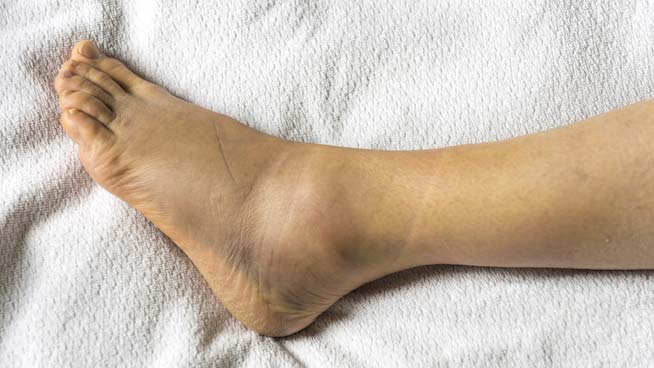
The Problem: What Exactly is a Grade 3 Ankle Sprain?
Ankle sprains are categorized into three grades based on severity. A grade 3 ankle sprain is the absolute most severe type. It occurs when the ligament (the tough band of tissue connecting your bones) is not just stretched or partially torn, but completely ruptured or torn in half.
Because the ligament is severed, there is a complete loss of stability in the affected joint. Your ankle literally does not have the structural support it needs to hold your body weight. This level of damage often leads to extreme bruised ankle symptoms, where the pooling of blood creates dark, scary-looking discoloration that travels down to your toes.
Grade 3 Ankle Sprain Symptoms
If you have a grade 3 sprain, you will likely experience:
- Complete tearing or rupture of one or more ankle ligaments (usually the ATFL or CFL).
- Extreme, immediate joint instability (it feels “wobbly” or like it will give out).
- Severe pain, rapid swelling, and extensive dark purple or black bruising.
- An inability to bear any weight or walk on the affected foot.
Is a Grade 3 Sprain Worse Than a Broken Ankle?
Surprisingly, yes. Many sports medicine professionals consider a grade 3 sprain to be far more complex than a clean bone break. Ligaments have a very poor blood supply and require extensive, targeted rehabilitation to heal properly. Without the right rehab, a torn ligament will heal loosely, leading to a lifetime of weak ankles and repeated injuries.
Warning: The Dangers of “Just Resting”
The biggest mistake you can make with a completely torn ligament is assuming that “time heals all wounds.” In the case of a grade 3 sprain, time without action creates dysfunction.
The Dangers of Resting Too Long
- Severe Joint Stiffness: Within 48 hours, the fluid in your joint thickens, locking up your range of motion.
- Muscle Atrophy: Your calf and foot muscles begin to shrink and weaken almost immediately.
- Permanent Scarring: Without movement, your body lays down a messy, disorganized web of scar tissue that dries rigid and brittle.
The “Ankle Brace” Trap
Many doctors will hand you a walking boot or a tight lace-up ankle brace and tell you to wear it for months. Beware of the ankle brace trap. While a brace is necessary for the first few days to protect a fresh tear, relying on it long-term guarantees permanent instability. Braces act as artificial stabilizers; if you constantly wear one, your brain stops talking to your ankle muscles.
The 2026 Science Shift: Why R.I.C.E. is Dead
For decades, the gold standard for an ankle injury was the R.I.C.E. method. As of 2026, sports medicine has completely abandoned this protocol. Science now proves that icing a sprained ankle and total rest actually delay your healing by months.
Expert Insight 1: Inflammation is the “Repair Crew”
A consensus statement in the British Journal of Sports Medicine (BJSM) highlights that the inflammatory phase is critical for healing soft tissue. Icing causes vasoconstriction, which locks the “repair crew” out of the injury site, effectively stalling the rebuilding of your torn ligament. Read the BJSM “PEACE & LOVE” protocol here.
Expert Insight 2: The “Muscle Pump” for Swelling
Contemporary research on PubMed demonstrates that the lymphatic system—which flushes out swelling—relies entirely on muscle contractions to move fluid. If you rest and ice, the swelling stays trapped, creating a toxic environment for the ligament. Explore the study on cryotherapy and lymphatic drainage.
Expert Insight 3: Conservative vs. Surgical Management
A study found in the Journal of Athletic Training shows that patients with grade 3 sprains who utilize functional rehab have identical (and sometimes superior) outcomes to those who undergo surgery. See the 2026 meta-analysis on Grade 3 outcomes.
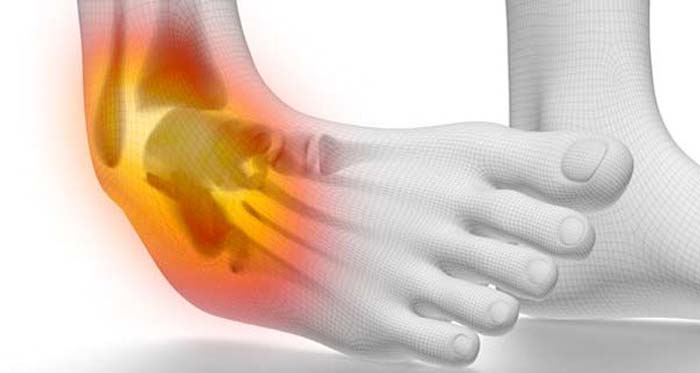
The Solution: Active, Functional Rehab
So, if resting and icing are out, how do you actually heal a completely torn ligament? The answer is Active Functional Rehab. You must proactively encourage the body’s natural healing response through safe, controlled movement.
How-To: The 4 Phases of Active Rehab
- Phase 1: Lymphatic Flushing. Instead of icing, use pain-free movements to pump the stagnant swelling out of the joint.
- Phase 2: Restoring Mobility. Focus on regaining your up-and-down movement.
- Phase 3: Strengthening the Shield. Strengthen the peroneal muscles to act as your “natural ankle brace.”
- Phase 4: Neuromuscular Retraining. Use balance drills to retrain the brain-to-foot connection.
HEM Ankle Rehab: The Premier At-Home Treatment
A grade 3 ankle sprain will absolutely not heal itself correctly without a plan. That is where HEM Ankle Rehab comes in.
HEM is a complete, step-by-step system designed specifically to heal severe ankle injuries from home. It perfectly aligns with 2026 sports medicine standards by completely abandoning the R.I.C.E. method in favor of active healing. While the standard medical timeline for a grade 3 sprain is 3 to 6 months, people who follow the HEM system often return to normal walking in as little as 3 to 6 weeks.
With HEM Ankle Rehab, you will regain full mobility, build extreme joint stability, and most importantly, get back to doing what you love without the fear of another injury.
People Also Ask (FAQ)
How long does a grade 3 ankle sprain take to heal?
With outdated rest and ice, it can take 6 months. However, with a proactive sprained ankle treatment like HEM, you can see massive improvements in swelling within days and return to full function in a fraction of the time.
Can a completely torn ligament heal without surgery?
Yes! This is the biggest myth in orthopedic medicine. Your body heals torn ligaments through “scar tissue bridging.” Through active rehab, you train that new tissue to become dense, organized, and remarkably strong.
Should I wear a boot for a grade 3 sprain?
A walking boot can be helpful for the first 3-5 days to manage extreme pain, but you should transition to active movement as soon as possible to avoid permanent stiffness and muscle atrophy.
Disclaimer: The information provided in this article is for educational purposes only and does not substitute for professional medical advice. Always consult a healthcare provider for a proper diagnosis—especially to rule out fractures—before beginning any rehabilitation program.