You’re walking across a quiet room, and suddenly—pop. Then a few steps later—snap. It’s loud enough for people nearby to hear, yet there’s no “ouch” moment. No swelling, no bruising, and no immediate reason to limp.
If you’ve ever wondered why your ankles sound like a bowl of Rice Krispies, you aren’t alone. In the world of sports medicine, this is one of the most common questions we hear. But just because it doesn’t hurt right now doesn’t mean you should ignore the signal your body is sending.
In this guide, we are going to dive into the modern science behind that clicking sound, why the old-school advice of “just rest it” is actually doing more harm than good, and how you can ensure those pops don’t turn into a chronic injury that sidelines you for months.
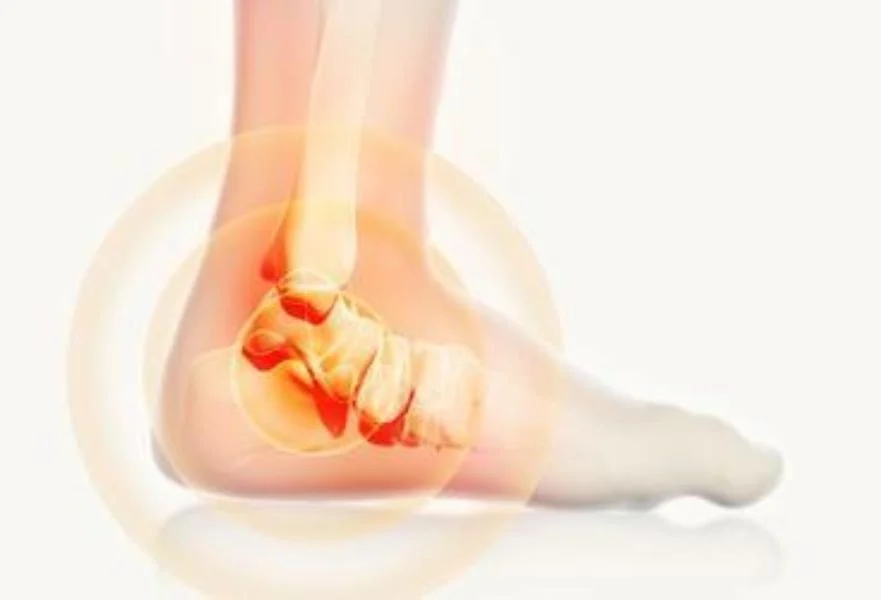
What Exactly is That Popping Sound?
To understand how to fix it, we first have to understand what it is. Most “painless” ankle popping comes down to three main culprits:
1. Gas Bubbles (Cavitation)
Just like when you crack your knuckles, your ankle joints contain synovial fluid. This fluid acts as a lubricant. When the joint volume changes during movement, tiny bubbles of oxygen, nitrogen, and carbon dioxide can form and then rapidly collapse. This “pop” is harmless in isolation, but frequent cavitation can sometimes indicate a joint that is moving through an irregular range of motion.
2. Tendon Snapping
This is the most common cause of a rhythmic “click” or “snap.” Your tendons are like tight rubber bands that slide over bony protrusions. If your muscles are slightly tight or your alignment is off, the tendon can catch on a bone (like the malleolus) and “snap” back into place as you walk. While it doesn’t hurt initially, this repetitive friction can eventually lead to inflammation.
3. Ligament Laxity
If you have had a sprained ankle in the past, your ligaments might be slightly “stretched out.” This creates a tiny bit of extra room in the joint, allowing the bones to shift more than they should, resulting in a clicking sound as they settle back into place.
The 2026 Scientific Perspective: Why “No Pain” Isn’t “No Problem”
In the past, doctors would tell you, “If it doesn’t hurt, don’t worry about it.” However, 2025 and 2026 sports medicine standards have shifted toward pre-habilitation and proactive joint health. Recent research shows that asymptomatic joint sounds can be a precursor to functional instability.
Expert Insight: A 2025 study published in the British Journal of Sports Medicine (BJSM) found that individuals with frequent, painless joint crepitus (popping) in the lower extremities often exhibited “subclinical proprioceptive deficits.” In plain English: your brain isn’t perfectly tracking where your ankle is in space, which significantly increases your risk of a future acute sprain. Source: BJSM.
Furthermore, a 2024 meta-analysis in the Journal of Athletic Training highlighted that “mechanical popping” often correlates with minor peroneal tendon subluxation. Even without pain, this constant snapping can wear down the protective sheath of the tendon over time. Source: Journal of Athletic Training.
The Trap of the “Wait and See” Approach
The biggest mistake people make with ankle popping is waiting for it to hurt before they do anything about it. By the time you feel pain, you are likely dealing with localized inflammation or tissue damage.
The Danger of Chronic Rest
If you start to feel a little “stiff” and decide to take a week off from the gym or your daily walk, you might think you’re helping. You aren’t. In fact, resting too long is one of the worst things you can do for an ankle. Prolonged rest leads to:
- Muscle Atrophy: The stabilizing muscles around your ankle (like the peroneals and tibialis anterior) weaken quickly.
- Scar Tissue: Without movement, the body lays down “messy” collagen fibers that create stiffness.
- Permanent Instability: A weak ankle is an ankle waiting to be rolled.
The Myth of the Ankle Brace
Another common “solution” is to slap on a compression sleeve or a rigid brace. While a brace might make you feel secure, it acts like a crutch. It tells your muscles they don’t have to work. Over time, this leads to permanent instability because your body forgets how to stabilize itself naturally. You shouldn’t be looking for a cage for your ankle; you should be looking for a way to make it a fortress.
Why the R.I.C.E. Method is Officially Outdated
For decades, we were told to use R.I.C.E. (Rest, Ice, Compression, Elevation). In 2026, we know better. Ice actually delays the healing process by constricting blood vessels and preventing the natural inflammatory response required to repair tissue. Rest makes you stiff. Compression is only a temporary Band-Aid.
Modern recovery focuses on Active Functional Rehab. We want to encourage blood flow, improve the “communication” between your nerves and muscles, and strengthen the joint through its full range of motion. This is the only way to stop the popping and prevent a future long-term recovery process from a major injury.
Main Benefits of Addressing Ankle Popping Early
- Improved Proprioception: You’ll have better balance and “feel” for the ground, making you more athletic and stable.
- Injury Prevention: By tightening the “slack” in the joint through muscle strengthening, you significantly lower the chance of a grade 2 or 3 sprain.
- Reduced Future Inflammation: Stopping the friction of snapping tendons now prevents tendonitis in five years.
- Greater Mobility: Functional rehab ensures your ankle can move 360 degrees without restriction, which protects your knees and lower back.
The Warning: What Happens if You Neglect It?
If you ignore constant ankle popping, you are essentially driving a car with a loose lug nut. It might be fine for a few miles, but eventually, the system will fail. Neglected ankle issues lead to:
- Chronic Ankle Instability (CAI): This is a condition where your ankle gives out frequently, even on flat surfaces.
- Early Onset Osteoarthritis: Constant mechanical friction in the joint wears down the cartilage.
- Compensatory Injuries: If your ankle is unstable, your knee and hip have to work twice as hard, leading to “mystery” pains in your back or legs.
The Solution: Active, Functional Rehab
So, how do you stop the popping and secure your joint? You need a system that doesn’t just “rest” the ankle but actively rebuilds it. This involves neurological “re-training” and specific strengthening that targets the tiny stabilizer muscles often missed in a standard gym workout.
This is where HEM Ankle Rehab comes in. Instead of traditional physical therapy that might take months of appointments, HEM is designed to be a comprehensive, at-home solution. It focuses on the three pillars of true recovery: improving circulation, restoring flexibility, and building rock-solid stability.
Whether you are dealing with a loud “click” every morning or you are trying to bounce back from a sprained ankle, the goal is to get the joint moving correctly so the body can do what it does best: heal itself.
People Also Ask (FAQ)
Is it bad if my ankle pops every time I rotate it?
If there is no pain, it is likely a tendon moving over the bone or gas bubbles escaping. However, if it feels “loose” or like it’s going to give out, that’s a sign of ligament laxity that needs functional strengthening.
Can I still run if my ankle is popping?
Yes, but you should prioritize a dynamic warm-up that activates your calves and peroneal muscles. If the popping is accompanied by a “catching” sensation, you should scale back your mileage and focus on a rehab program like HEM Ankle Rehab to stabilize the joint.
How do I stop my ankle from clicking when I walk?
The most effective way to stop the clicking is to strengthen the muscles that support the ankle. When the muscles are strong and the tendons are flexible, they stay in their proper tracks, reducing the friction that causes the sound.
Does cracking my ankle cause arthritis?
Modern studies, including research found on PubMed, suggest that simple cavitation (gas bubbles) does not cause arthritis. However, if the “crack” is actually bone-on-bone friction due to a previous injury, that can lead to joint wear over time.
Take Action Today
Don’t wait for the “pop” to become a “snap.” Your ankles are the foundation of your entire body. By switching from a passive “wait and see” mindset to an active, functional rehab approach, you can silence the noise and build a body that’s ready for anything.
Ready to build a stronger foundation? Discover how HEM Ankle Rehab can help you regain total confidence in your movement today.