If a doctor has diagnosed you with a grade 2 ankle sprain, you probably have a lot of questions like… How long is this going to take to heal? Do I need a boot? When can I walk normally again?
A grade 2 ankle sprain is a frustrating “middle ground” injury. It’s painful and disruptive, but the good news is that with the right approach, you can recover completely.
However, the way we treat these injuries has drastically changed. If you follow the outdated advice of simply resting and icing your ankle, you could be setting yourself up for months of weakness and lingering pain.
In this comprehensive 2026 guide, we are going to break down exactly what a grade 2 sprain is, why modern sports medicine has completely abandoned the R.I.C.E. method, and the exact step-by-step active rehab solution you need to get back on your feet fast.
The Problem: Understanding Your Grade 2 Ankle Sprain
Ankle sprains are categorized into three grades based on the severity of the damage to your ligaments (the tough, fibrous bands that connect your bones and stabilize your joint).
- Grade 1 (Mild): The ligaments are stretched but not torn. Minimal swelling and pain.
- Grade 2 (Moderate): The ligaments are partially torn. This is a significant structural injury.
- Grade 3 (Severe): The ligaments are completely ruptured or torn in half.
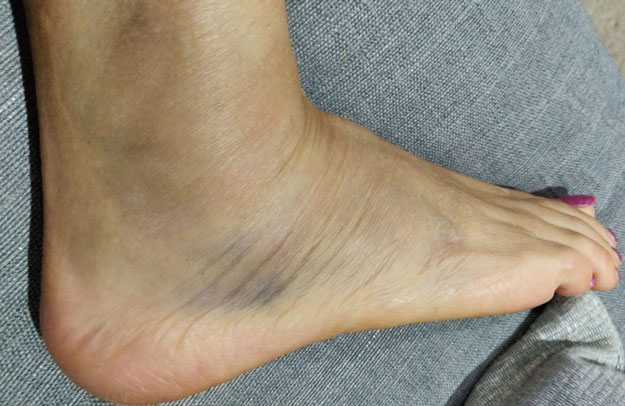
With a grade 2 ankle sprain, a portion of the ligament fibers has snapped. Because the ligament is partially compromised, the joint loses a significant amount of its natural stability. This often leads to chronic bruising and significant inflammation as the body attempts to protect the area.
Common Grade 2 Ankle Sprain Symptoms
If you are dealing with a grade 2 sprain, you will likely experience a very specific set of symptoms:
- Partial Tearing: You may have felt or heard a tearing sensation when the injury occurred.
- Moderate Instability: The ankle feels somewhat “loose” or wobbly when you try to stand on it.
- Noticeable Swelling and Bruising: Because fibers have torn, tiny blood vessels break, leading to moderate to severe swelling and dark purple or blue bruising around the outside of the foot and ankle.
- Painful Weight-Bearing: Walking is usually possible after the first few days, but it is highly uncomfortable and causes a sharp, localized ache.
- Restricted Movement: You can move the ankle slightly, but certain angles (especially rolling the foot inward) will trigger sharp pain.
Important Note: Before you begin any treatment plan, it is crucial to get an X-ray to rule out a bone fracture. While a grade 2 sprain mimics the pain of a fracture, a broken bone requires entirely different medical care (like strict immobilization). Once a fracture is ruled out, it’s time to get to work.
The 2026 Science Shift: Why R.I.C.E. is Completely Dead
For decades, doctors and physical therapists handed out the exact same advice for a sprained ankle: R.I.C.E. (Rest, Ice, Compression, Elevation). You were told to wrap it tight, put a bag of frozen peas on it, and sit on the couch.As of 2026, the sports medicine community has completely rejected the R.I.C.E. method. In fact, using ice and prolonged rest will actively sabotage your healing process.Why? When you tear a ligament, your body immediately triggers an inflammatory response. This isn’t a mistake; it’s a highly intelligent biological process. Your body sends specialized immune cells called macrophages to the injury site. These cells clean up the dead, torn tissue and release hormones that trigger the rebuilding of new ligament fibers.
Expert Insight 1: The “PEACE & LOVE” ProtocolAccording to the clinical consensus published in the British Journal of Sports Medicine (BJSM), “Ice” has been removed from the acute injury management protocol because it delays tissue regeneration. Instead, clinicians now follow the “PEACE & LOVE” approach, where LOVE stands for Load, Optimism, Vascularisation, and Exercise. Read the BJSM study on why soft tissues need PEACE and LOVE.
Expert Insight 2: The Failure of CryotherapyA comprehensive review in PubMed (PMC3396304) concludes that there is no evidence that cryotherapy (icing) helps heal soft tissue injuries. In fact, by narrowing the blood vessels, you are essentially “freezing” the waste in the joint, which leads to weak ankles that remain stiff for months. See the research on the lack of evidence for icing.
⚠️ WARNING: The Hidden Dangers of Resting and Bracing
It is incredibly tempting to baby a grade 2 sprain. You might think that lying in bed or strapping on a heavy, rigid ankle brace will protect you. However, prolonged rest and over-reliance on braces are a recipe for chronic, lifelong ankle problems.
The Danger of Prolonged Rest
- Stiffness and Adhesions: If you do not move the joint, the new scar tissue forms in a chaotic, rigid web. This makes the ankle permanently stiff and highly susceptible to tearing again.
- Muscle Atrophy: Muscles waste away incredibly quickly. Resting for weeks causes your calf and foot muscles to shrink, destroying the muscular support system your ankle joint relies on.
- Compensatory Injuries: A stiff, weak ankle changes the way you walk. This abnormal gait forces your knee and hip to absorb unnatural shock, often leading to secondary injuries up the kinetic chain.
The “Ankle Brace” Trap
While an ankle brace might feel secure in the short term, relying on it long-term causes permanent instability. When you wear a brace, your nervous system realizes that the plastic and velcro are doing the work of stabilizing the joint. Consequently, your brain stops sending signals to your ankle muscles. This blunts your proprioception (your body’s subconscious ability to balance). You should strive to build natural strength so that an artificial brace is completely unnecessary.

The Solution: Active, Functional Rehabilitation
A grade 2 ankle sprain will not properly heal itself. You must proactively heal it. The modern solution to a partial ligament tear is Active Functional Rehab.By introducing safe, pain-free movement, targeted stretches, and specific strengthening exercises, you act as a manual pump for your body. Muscle contractions pump out the stagnant, swollen lymphatic fluid and pump in fresh, oxygen-rich blood filled with the nutrients your torn ligament desperately needs to stitch itself back together.
Main Benefits of Active Rehab:
- Rapid Swelling Removal: Natural movement flushes out fluid far faster than ice and compression.
- Accelerated Healing: Increased blood flow speeds up the macrophage cleanup and tissue regeneration process.
- Restores Proper Mechanics: Targeted mobility work ensures scar tissue heals flexibly, maintaining your natural range of motion.
- Builds a “Natural Brace”: Strengthening the surrounding muscles drastically reduces your risk of future sprains.
- Fast Pain Relief: Gentle movement releases endorphins and reduces joint pressure, naturally lowering your pain levels.
How to Heal Your Grade 2 Sprain Fast at Home

If you rely on the old method of resting and icing, a grade 2 sprain can take 8 to 12 weeks to heal—and even then, you will likely be left with a weak, easily re-injured joint. However, by utilizing a world-class active rehab program, you can slash that timeline dramatically, often achieving full, pain-free recovery in just 10 to 15 days.

To get these kinds of results from the comfort of your living room, we highly recommend HEM Ankle Rehab. HEM Ankle Rehab is the premier at-home treatment system specifically designed to heal any type of sprained ankle. It perfectly aligns with modern sports medicine by completely abandoning the R.I.C.E. method in favor of a safe, progressive, 7-step active healing system.
How HEM Ankle Rehab Works:
- Encourages Active Healing: HEM promotes gentle, pain-free movement from day one, rushing essential nutrients to the partially torn ligament.
- Restores Full Mobility: Through targeted mobility drills, HEM prevents the buildup of rigid scar tissue, ensuring your ankle moves freely.
- Strengthens the Joint: Progressive exercises rebuild the stabilizing muscles, effectively creating a “natural brace” out of your own tissue.
- Retrains Balance: Specialized proprioception drills reconnect your brain to your ankle, eliminating the feeling of chronic instability.
- Utilizes Soft Tissue Therapy: HEM teaches you at-home techniques to break down stubborn adhesions and enhance circulation.
- Avoids Ice and Compression: By focusing on lymphatic drainage, HEM flushes out swelling naturally without restricting your blood vessels.
- 100% At-Home System: No expensive physical therapy copays or special equipment required.
People Also Ask (FAQ)
Does a grade 2 sprain need a cast?
Unlike a bone fracture, a grade 2 ankle sprain typically does not require a hard cast. Immobilizing a partial ligament tear in a cast can cause severe joint stiffness and profound muscle atrophy. Modern research published in the Journal of Athletic Training suggests that functional treatment leads to better outcomes than cast immobilization. Read the study on functional treatment vs. immobilization.
Can I walk on a grade 2 sprained ankle?
In the first 24 to 48 hours, walking may be incredibly painful and is generally discouraged if it alters your gait significantly (limping). However, as the initial shock subsides, gradual, pain-free weight-bearing is actually highly beneficial. Modern research supports early, controlled weight-bearing to stimulate tissue repair.
How long does a grade 2 ankle sprain take to heal?
If you use the outdated R.I.C.E. method, expect a grueling 8 to 12 weeks before you can return to sports. However, if you immediately begin a structured, active rehabilitation program like HEM Ankle Rehab, you can achieve full, stable recovery in as little as 10 to 15 days.
Should I sleep with an ankle brace on?
No. Wearing an ankle brace or tight compression wrap while sleeping restricts your blood flow. Your body does the vast majority of its cellular repair and lymphatic flushing while you sleep. Unless a doctor has explicitly instructed you to immobilize a severe injury overnight, let the ankle breathe.
Disclaimer: The information provided in this article is for educational purposes only and does not substitute for professional medical advice. Always consult a healthcare provider for a proper diagnosis—especially to rule out fractures—before beginning any sprained ankle treatment program.